Hue: Imperial City
In late January 1968, the city of Hue ceased to exist in any meaningful sense. What replaced it for twenty-five days was a killing ground — block by block, room by room, the old imperial capital reduced to rubble and body counts. The Perfume River ran through all of it, indifferent, the way rivers are.
It is a very pleasant city now.
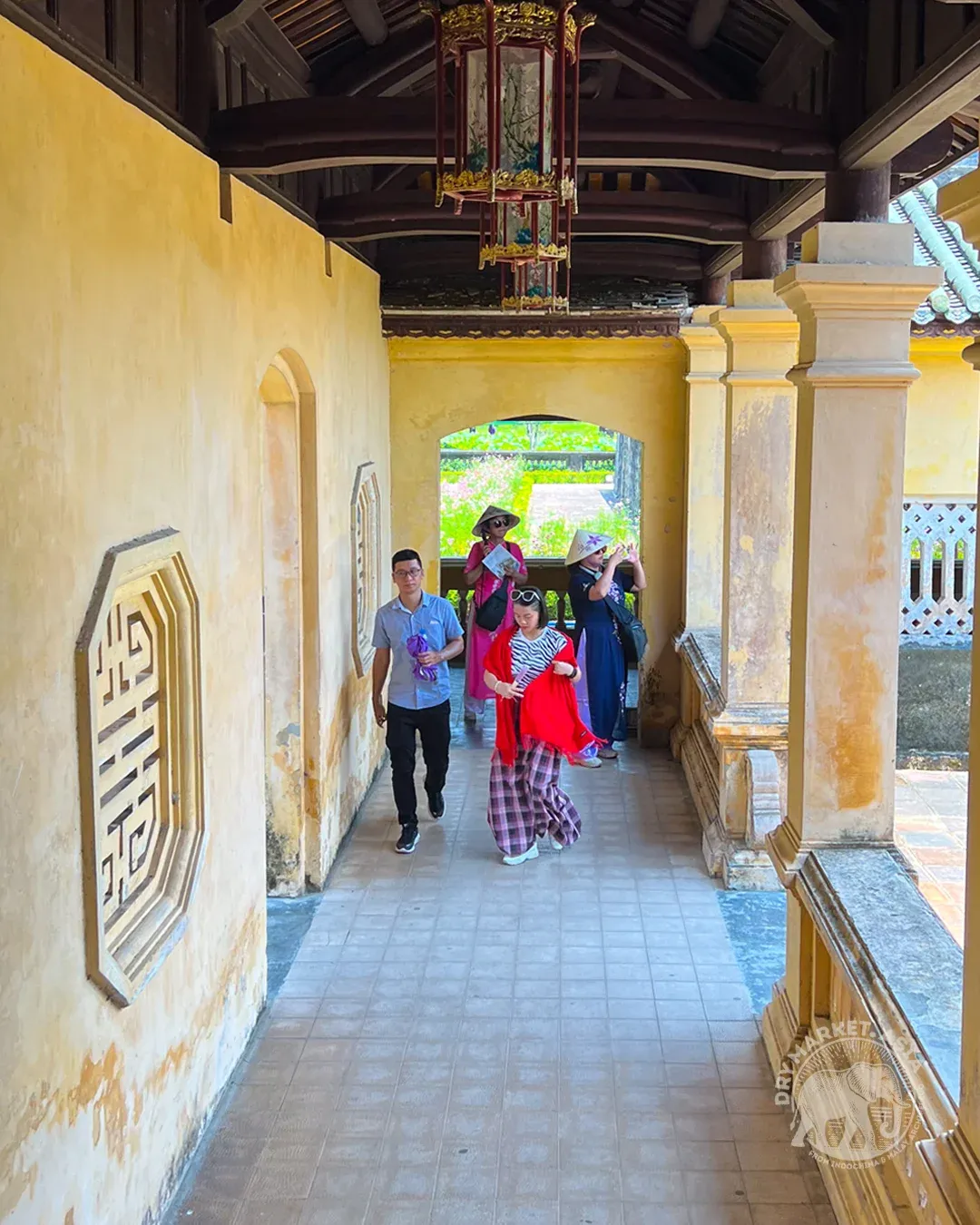
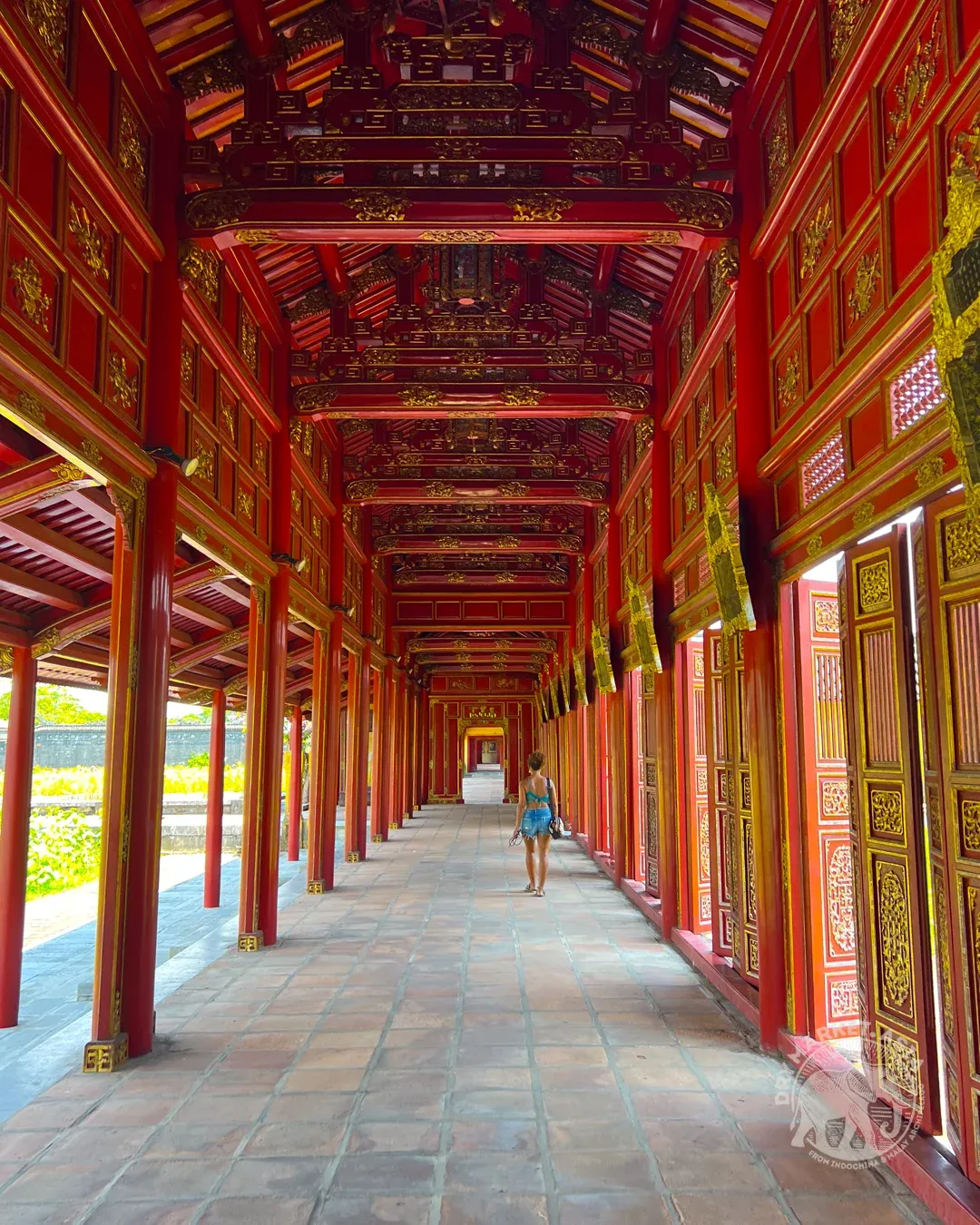
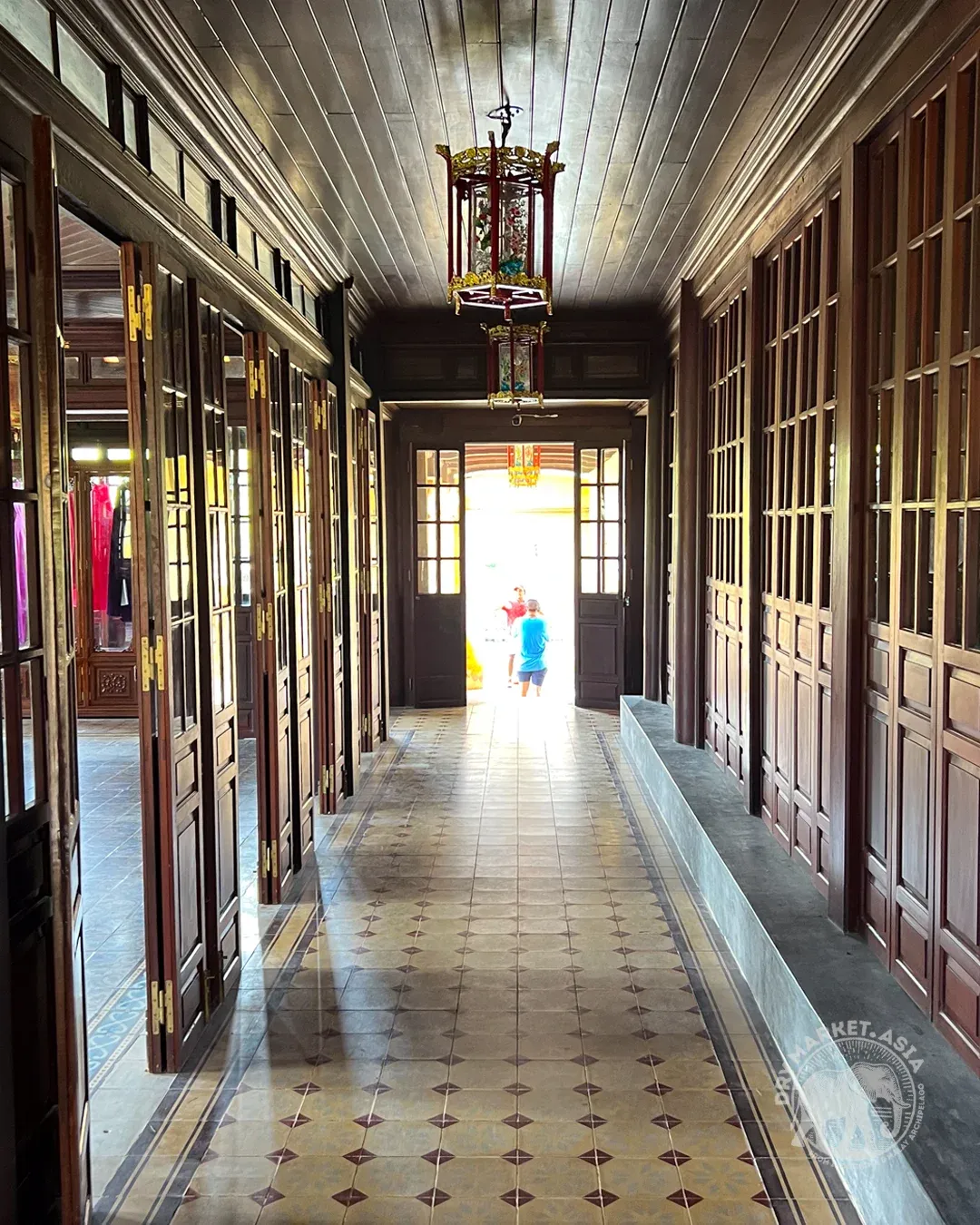
Strolling Hue Imperial City
Huestory
Hue became the imperial capital in 1802 when Gia Long, first emperor of the Nguyen dynasty, unified Vietnam after a century of civil war and chose a city on the Perfume River as his seat. He built a Citadel modeled loosely on the Forbidden City in Beijing — a walled imperial enclosure of palaces, temples, and administrative buildings covering nearly five square kilometers. It was the political center of a unified Vietnam and, more than that, the cultural one.
The emperors who followed were not merely administrators. Minh Mang expanded the Citadel. Tu Duc wrote poetry and built a retreat complex of such refinement that it functioned as a second court.
The Nguyen line produced rulers who understood that legitimacy in Vietnam required more than military authority — it required cultural weight.
What accumulated inside those walls over a century and a half was the full register of Vietnamese high culture: nhã nhạc, the royal court music so elaborate and specific that UNESCO would eventually inscribe it as a world intangible heritage; a cuisine built around the aesthetics of the imperial table, still distinct from anything else in the country; silk, lacquerware, the conical hats that became a national symbol but originated here as court goods. Hue was where Vietnamese civilization had chosen to concentrate itself.
The French arrived in 1883 and kept the emperors in place as ceremonial figures, which is what empires do with inconvenient dynasties. The Nguyen line continued, diminished, until Bao Dai abdicated in 1945. But Hue remained what it had always been — a city that understood itself as the center of something, even after the center had been removed.
By 1968 it was a city of 140,000 people, a university town, relatively prosperous, the kind of place that had managed to hold itself slightly apart from the war grinding through the countryside around it. That distance was about to close.
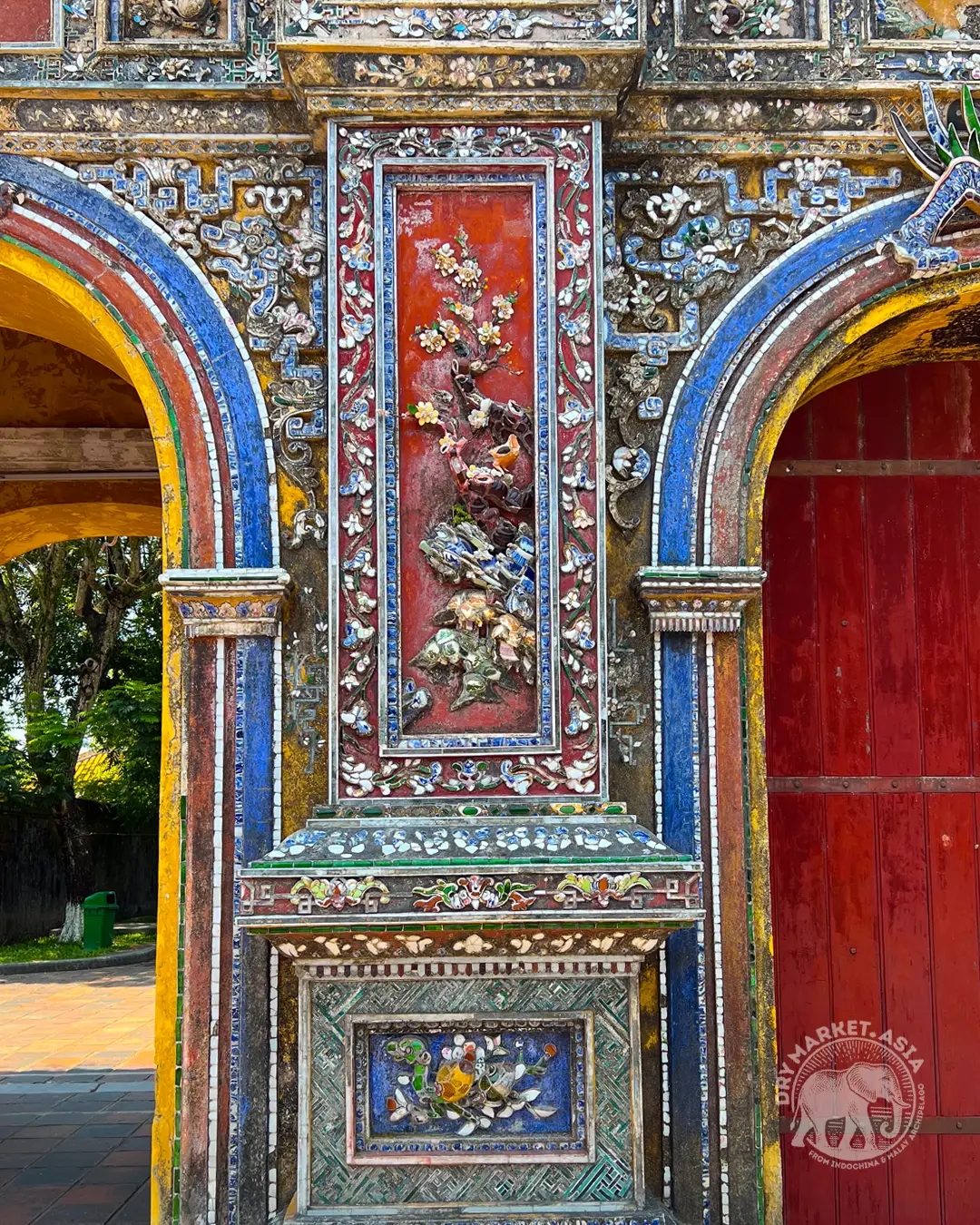
And then Tet Happened
On the morning of January 31st, 1968, a National Liberation Front flag flew from the main gate of the Hue Citadel. It would stay there for twenty-five days.
The force that put it there had moved into the city in the early hours, using the Tet ceasefire as cover, coordinating with the broader offensive hitting more than a hundred South Vietnamese cities simultaneously.
In Hue, the plan went better than almost anywhere else. By dawn, the NVA and Viet Cong controlled most of the city. The MACV compound held. A few isolated positions held. Everything else was gone.
The political objective was clear: hold the imperial capital long enough to demonstrate that the war was unwinnable, that the South Vietnamese government could not protect its own cities, that the population — given the opportunity — might rise.
The population did not rise. But the flag flew, and the cadres with their lists went to work, and the executions began in the first days of the occupation. The mass graves at Gia Hoi and the salt flats and the jungle west of the city would not be found until the battle was over. When they were, the count of civilians killed ran to somewhere between 2,800 and 6,000: teachers, civil servants, priests, anyone whose name appeared on a list.
All Hell Ensues
The Marines who went into Hue were not prepared for what they found. They had been fighting a war of ambushes and tree lines and villages that burned easily. Hue did not burn easily. Hue had to be taken apart piece by piece, and the pieces kept shooting back.
What followed was some of the most brutal urban combat American forces had experienced since the Korean War — block by block, house by house, room by room, through a city that had stood for a century and a half and was now being measured in sectors and fire zones.
The Marines called in artillery. They called in air support. General Westmoreland had initially ordered restrictions on heavy fire to protect the historic structures. Those restrictions were lifted.
The Citadel walls — six kilometers of them, three feet thick, built by Gia Long's engineers to project permanence — became a military objective, pocked and cratered and eventually breached.
The ARVN forces fighting alongside the Americans took casualties that were proportionally higher and received proportionally less coverage. The battle belonged, in the American telling, to the Marines. In the Vietnamese telling it was more complicated.
By February 24th it was over. The NLF flag came down from the Citadel gate. The cost: roughly 150 American dead, 400 ARVN dead, an estimated 5,000 NVA and Viet Cong dead. And the city — what remained of it.
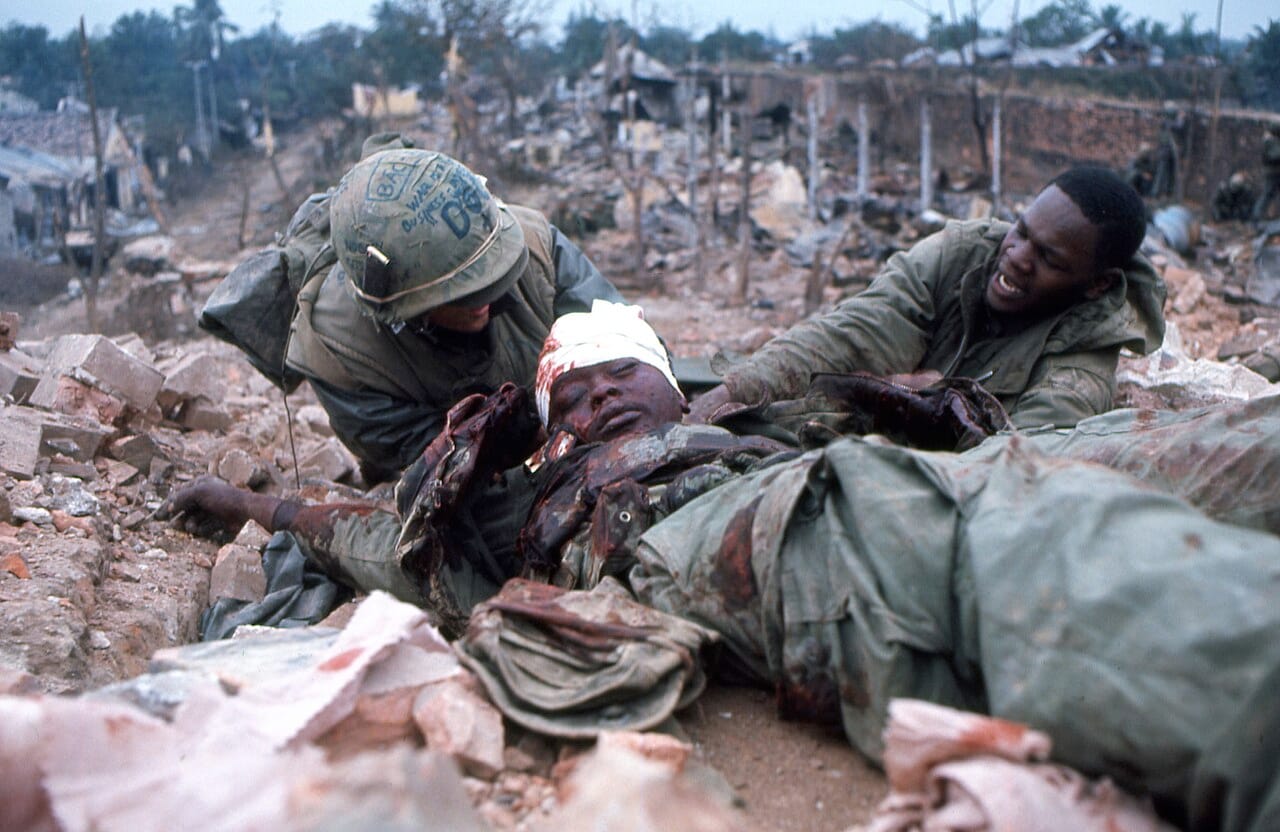
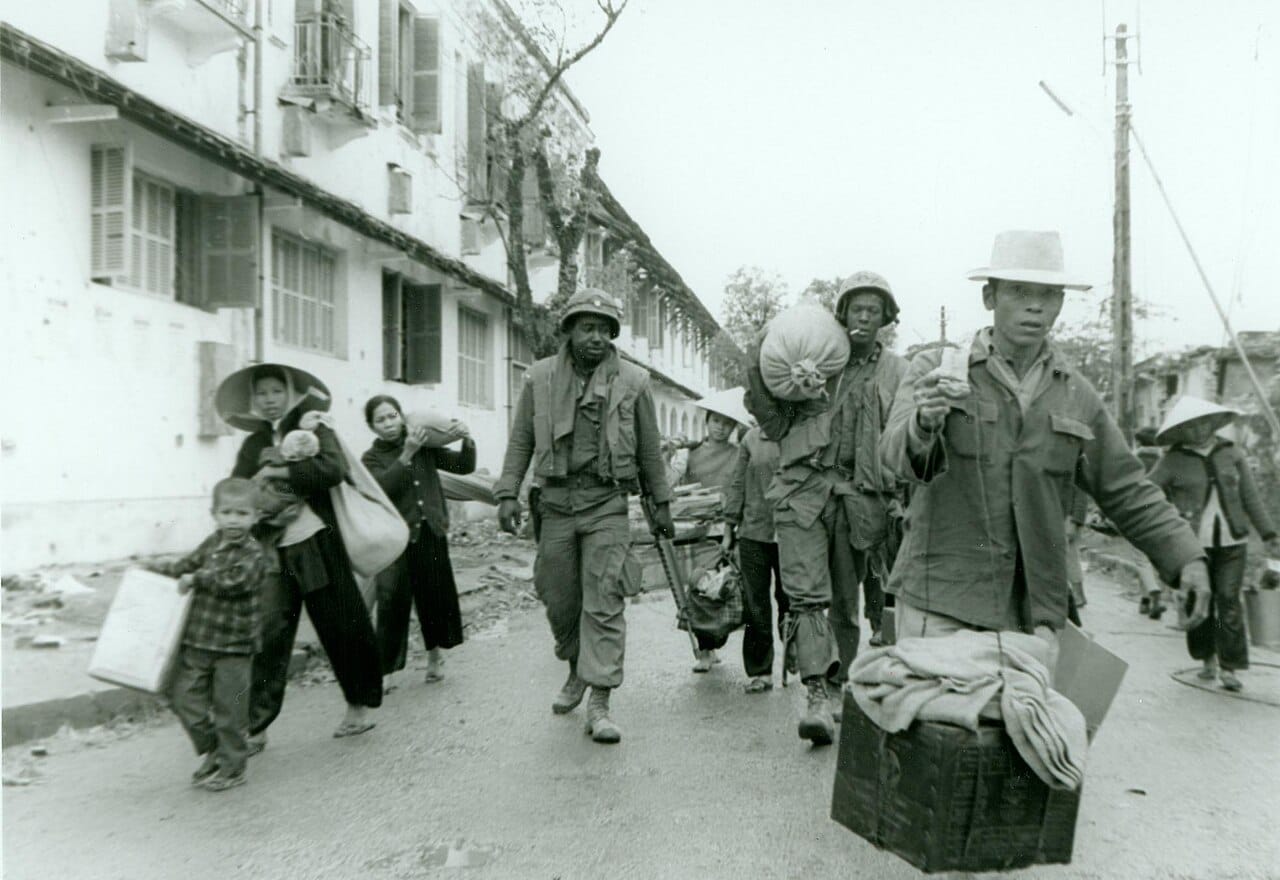
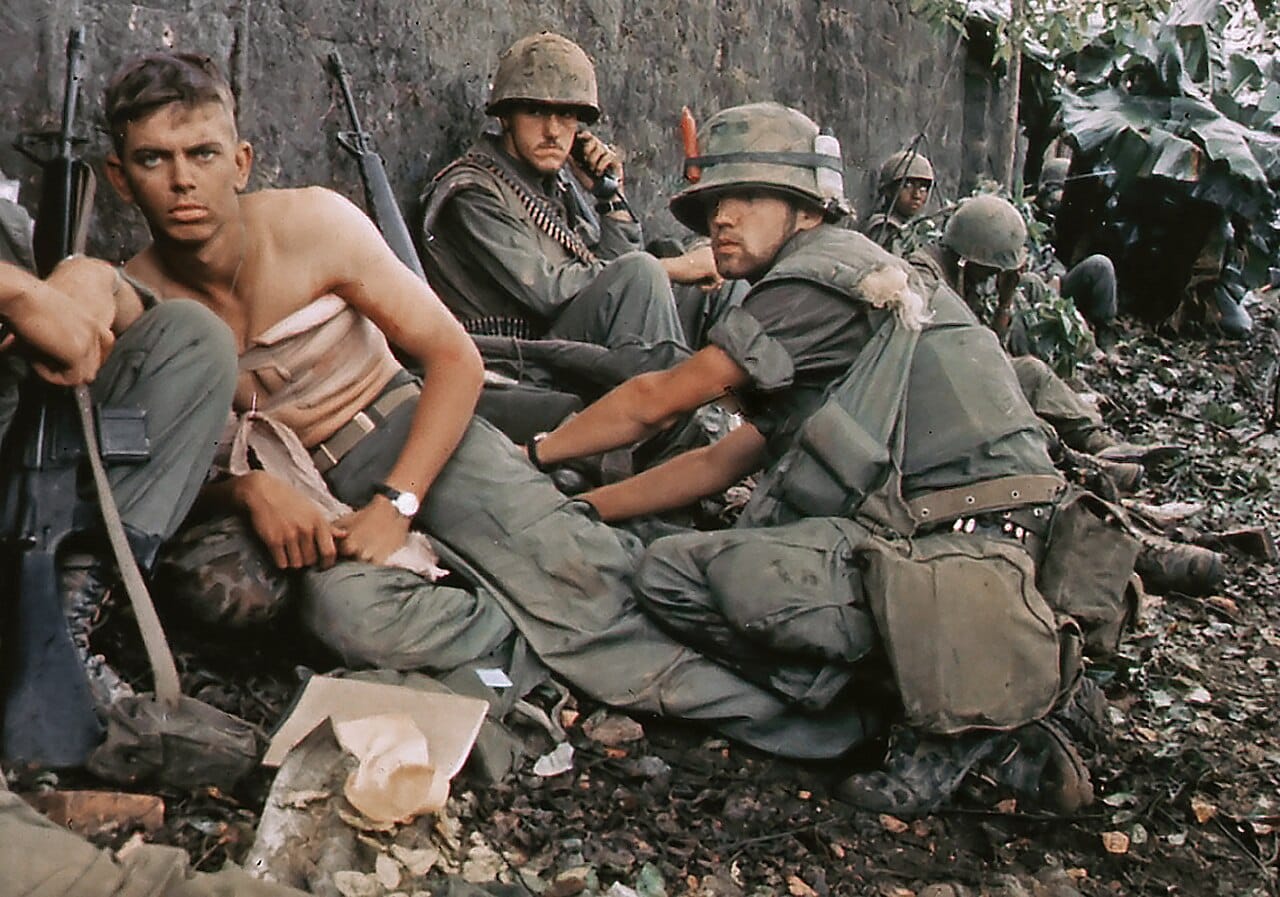
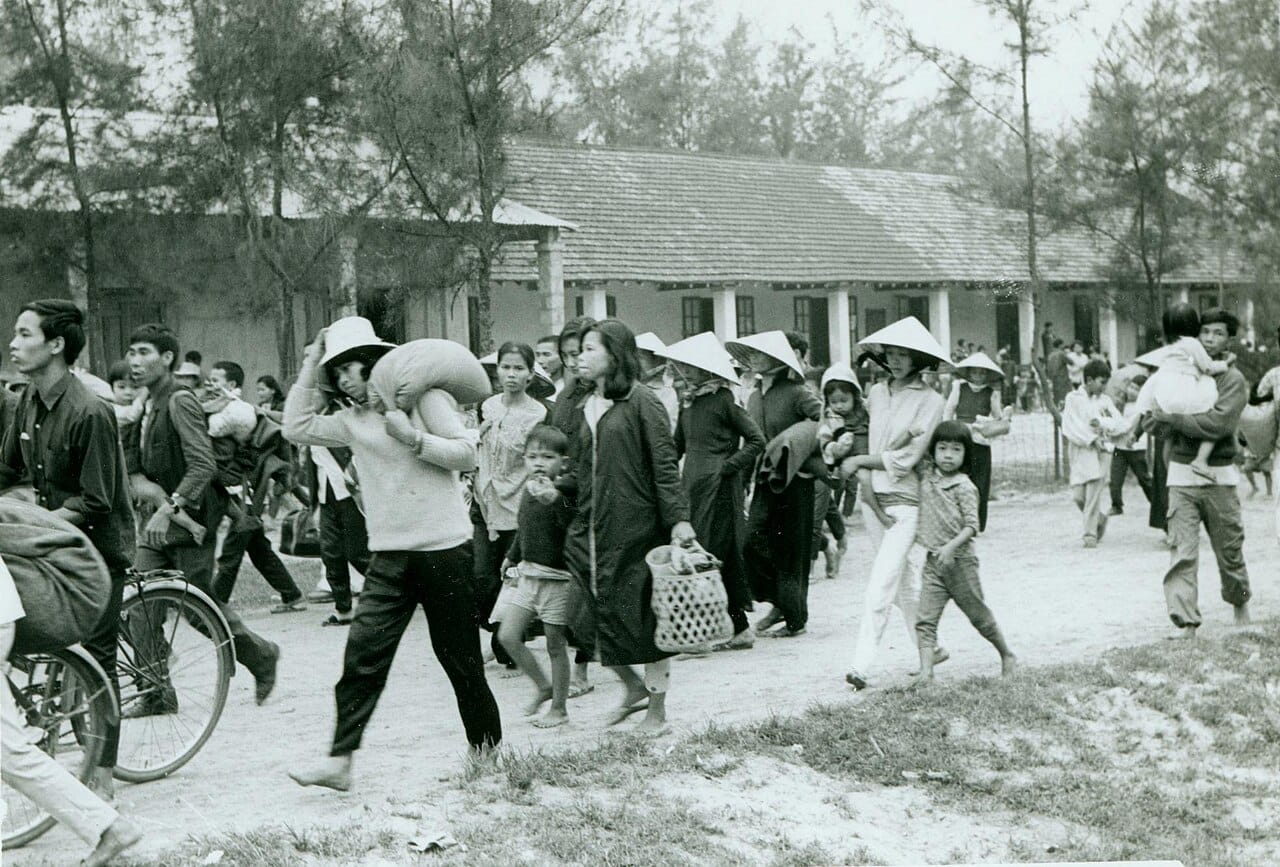
Marines Battle & People Flee the Tet Offensive in Hue (Wiki Commons)
Hue Citadel Today
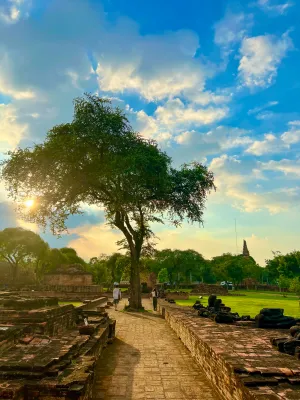
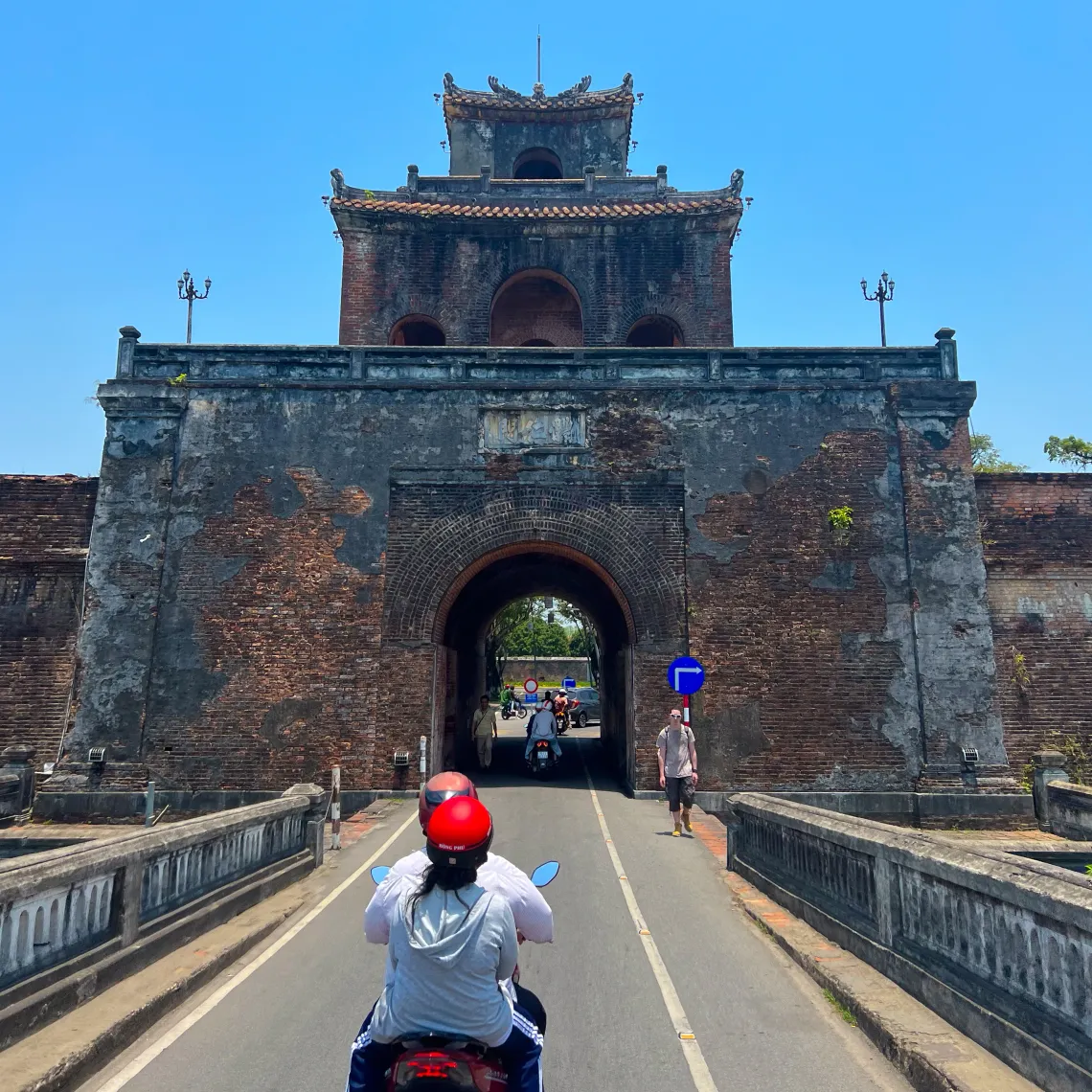
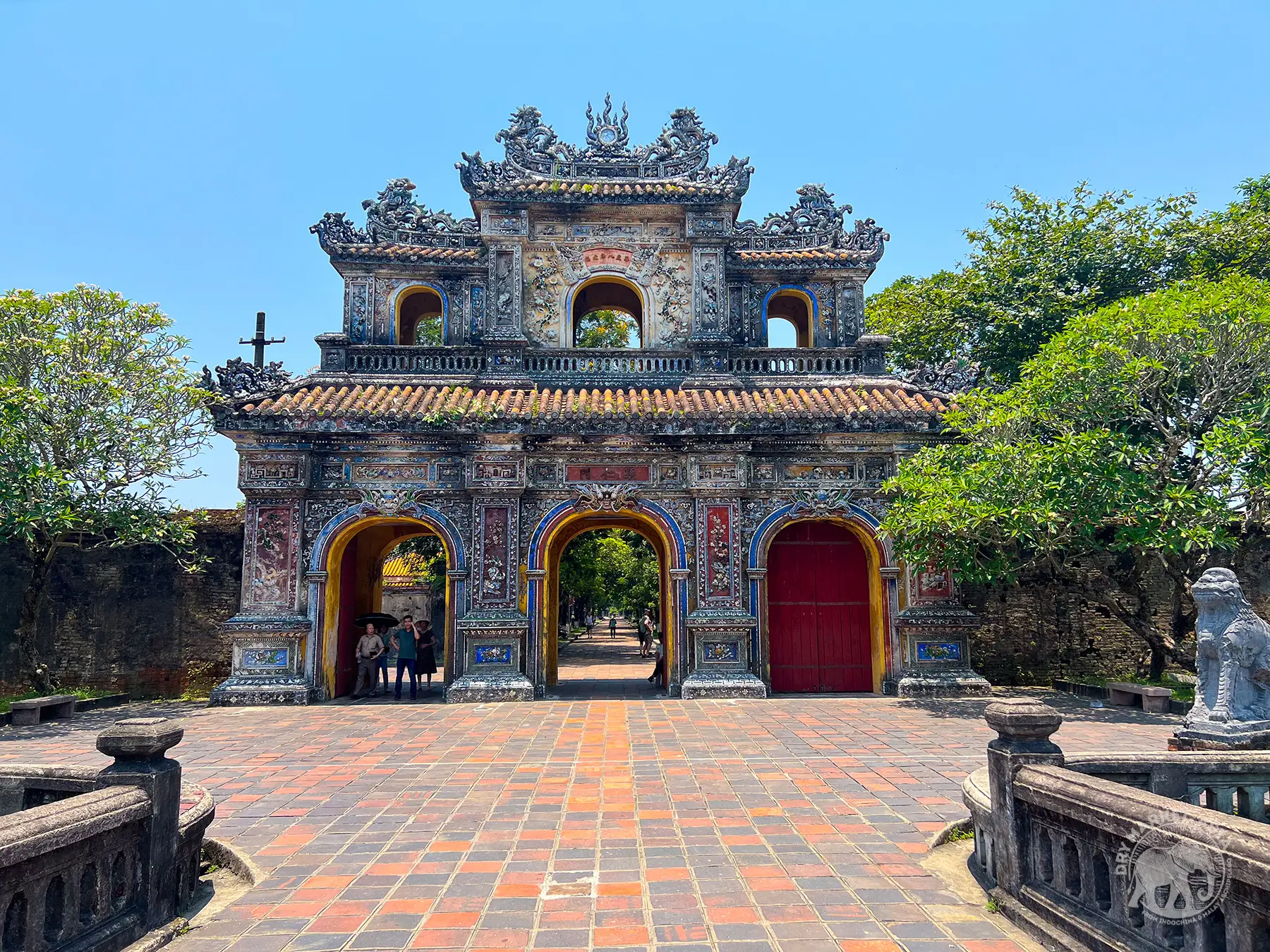
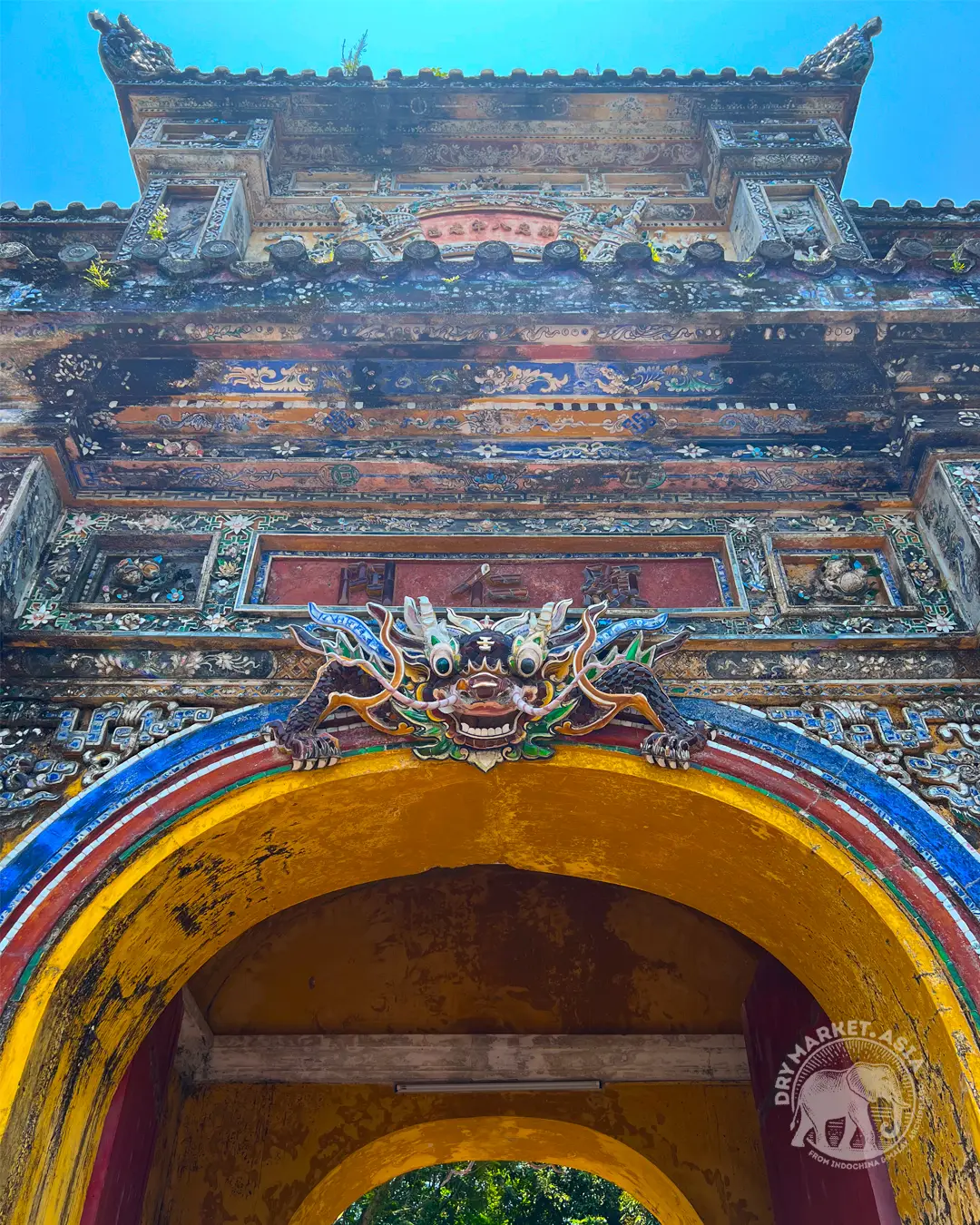
You walk into the Citadel now through the Ngo Mon gate, the same gate the NLF flag flew from for twenty-five days in 1968, and what strikes you first is the quiet. Not silence — there are tourists, vendors, schoolchildren on field trips — but a quality of stillness underneath the noise that old walled places sometimes hold.
The restoration is partial and honest about being partial. Where the palaces stood and don't stand anymore, there is maintained ground and explanatory signage and the particular melancholy of a foundation outline. The Thai Hoa Palace survived. The Emperor's Reading Room did not.
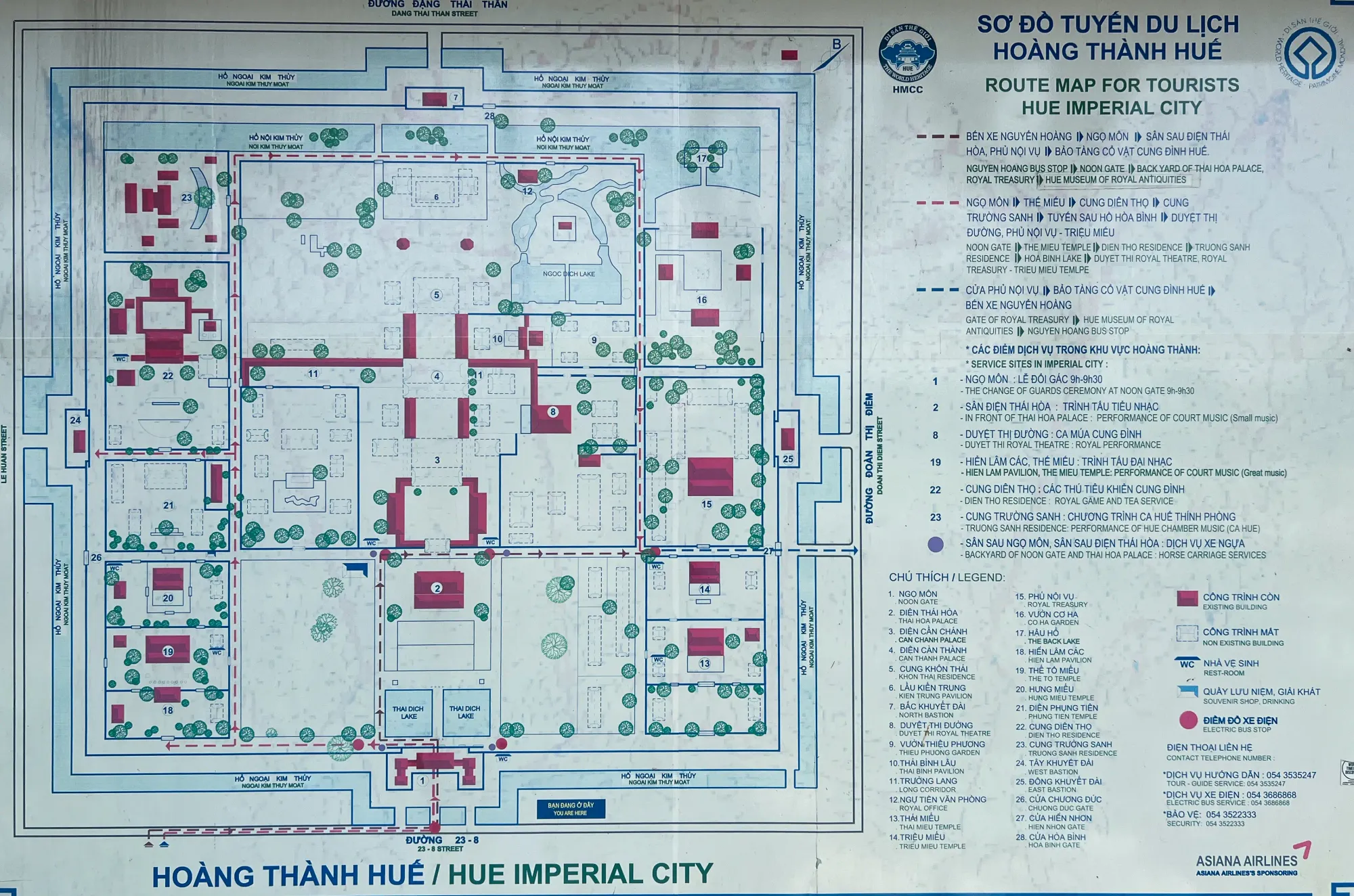
The Citadel is a city within a city — the outer walls enclose roughly five square kilometers, and inside those walls sits a second enclosure, the Imperial City, and inside that a third, the Forbidden Purple City, where only the emperor and his household could enter.
Three concentric rectangles of diminishing access, each one more sacred than the last. The logic is Chinese in origin, borrowed from Beijing, adapted to Vietnamese geography and Vietnamese ambition. The Perfume River runs along the southern wall. The flag tower — built in 1807, survived everything — anchors the southern approach.
What the French left alone, time wore. What time left, the battle of 1968 took.
The Forbidden Purple City took the worst of it — nearly all of its structures were destroyed during the fighting, and what you walk through now is largely open ground punctuated by gates and pavilions and the occasional surviving building that seems surprised to still be standing. The Thai Hoa Palace, the Hall of Mandarins, the Hien Lam Pavilion — these survived and have been restored somewhat.
Mornings Before the Heat Blankets Everything
The Perfume River runs through all of it still, indifferent the way rivers are, and in the early morning before the heat arrives, it is the most pleasant place in the city to be. The light is doing something specific to the water that I can't hope to describe. Women in áo dài cycle along the south bank. The city is waking up around a river that has been waking up around for two thousand years.
Hue today is what cities become when they survive something they had no business surviving.
The population has grown to roughly 350,000. The university is still there — Hue University, one of the oldest in Vietnam, producing the kind of educated, unhurried urban class that gives a city its particular quality of life. The streets in the old quarter are narrow, tree-lined, and scaled for bicycles.
Hue Food
Any account has to reckon with the food, which is not incidental to the city's identity but central to it.
The royal court cuisine that developed under the Nguyen emperors never left — it adapted, it democratized, it moved from the palace kitchens into the street stalls and family restaurants that line the alleys south of the Citadel, and what you find there is the most refined and specific regional cuisine in Vietnam, which is saying something in a country that takes food seriously everywhere.
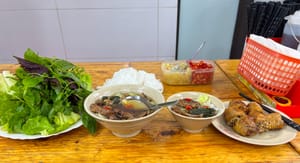
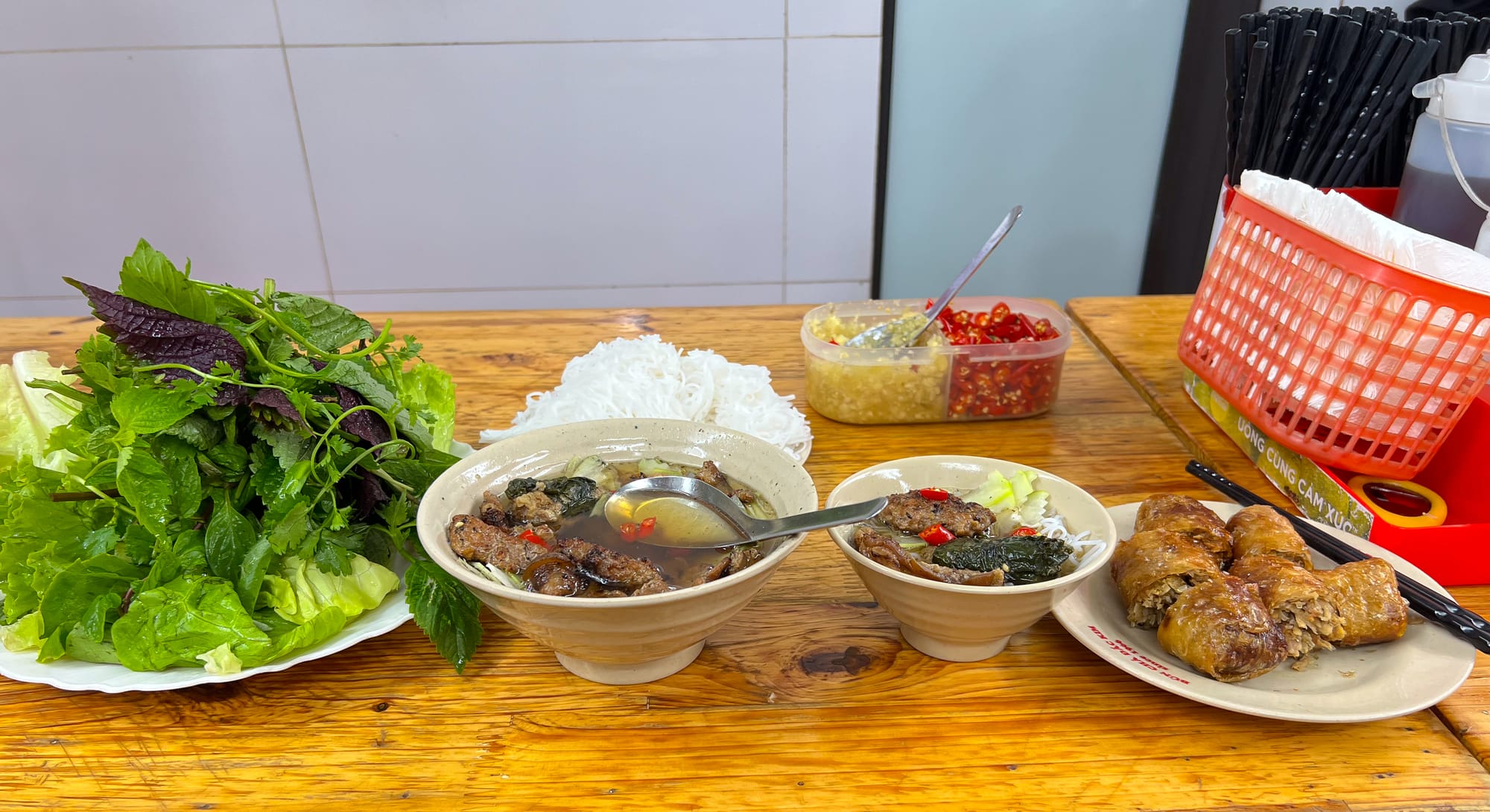
Bún bò Huế — the spiced beef noodle soup that bears the city's name is nothing like phở. The broth is deeper, more complex, built on lemongrass and shrimp paste, with a heat that arrives late and stays.
Bánh khoái, the crispy rice flour pancakes, the rice cakes, the small dishes that arrive in sequence at a proper Hue meal — this is court cuisine filtered through five generations of people.
Hue is a university town on a river with extraordinary food and a Citadel that is still partly standing and a quality of life that the Vietnamese consistently rank among the best in the country. The tourists come for the history and stay for the meals. The locals seem quietly aware that they live somewhere worth living, which is its own form of civic pride — less loud than Hanoi's, less frantic than Saigon's, more comfortable with itself.
I'll Be Back
The dead are still dead. The walls are still standing. The food is extraordinary. This is what's left, which is more than anyone had a right to expect in February 1968, and the city seems to know it, and has chosen — quietly, without drama — to be worth the visit.