Banaue Dispatch: the Bulul
The Figure at the Threshold
The alang sits apart from the sleeping house, elevated. The walls are old wood, darkened by decades of smoke and weather. The thatch overhead is dense enough to keep out the sideways rain that comes through the Cordillera. Inside, in the cool dark that smells of earth and dried grain, the rice waits.
And at the threshold, the Bulul.
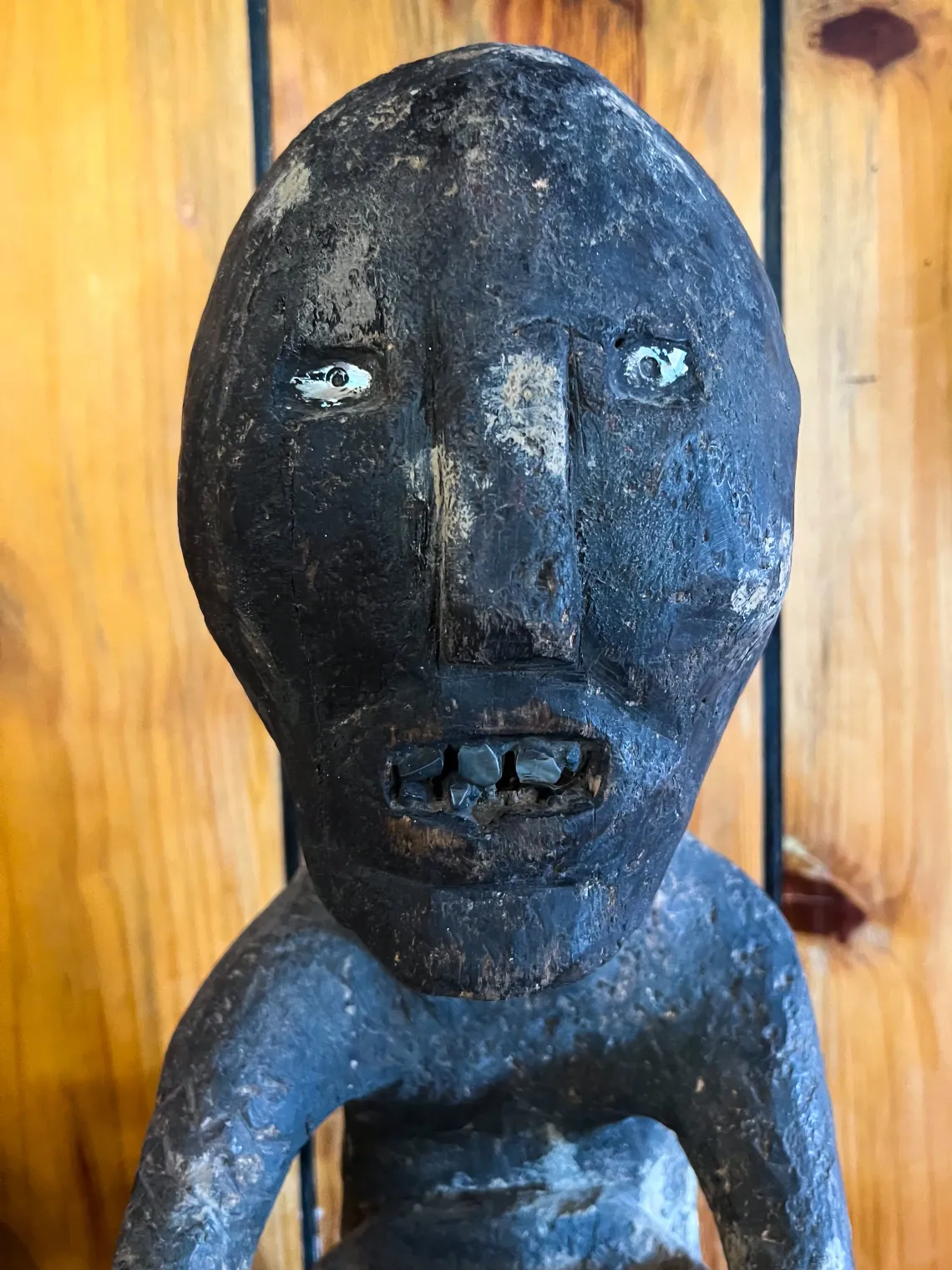
Seated. Legs extended forward, hands resting on knees — frozen, attentive. The carved face is worn where generations of hands have pressed offerings against it: rice wine, blood, the small and large urgencies of generations.
The Ifugao make these vessels under ritual conditions and at personal spiritual risk. The deity Bulul inhabits the wood, dwelling in the family granary. It accepts the blood offering at consecration. In return, it watches: stored grain, seed stock carried over from last season, the space between a good harvest and a bad one.
It is the easiest object in Ifugao material culture to photograph and the hardest one to understand.
The Double Name
The Metropolitan Museum of Art's catalog entry notes that the Bulul is both the name of a class of ancestor spirits and the name of the carvings that serve as vessels to house them.
In most traditions, the image and the thing it represents are distinct — the icon points toward the deity, the map toward the territory. The Bulul collapses that distinction. The carving does not represent the ancestor spirit. After consecration, it is the ancestor spirit, present in wood, bound to a specific granary and a specific family.
Collectors prize old bulul for that deep, almost lacquered surface — the patina that signals age and authenticity. But the darkness is not age alone. It is the accumulated record of every offering the figure has received: pig's blood at consecration, chicken's blood at planting, grease from food offerings stacked over decades.
Wood & Blood
The making is a problem of ritual before it is a problem of sculpture.
Ceremonies mark every stage, from the selection of the tree through the harvest of the wood, the carving of the figure, and the performance of the rites that call the ancestor spirit into the vessel.
The carver is a ritual technician operating under obligation and risk. An improperly made Bulul — carved from the wrong wood, consecrated without the correct invocations, rushed through any stage of its creation — is dangerous. The Ifugao treat the figure with care because the alternative is sickness entering the household through the granary door.
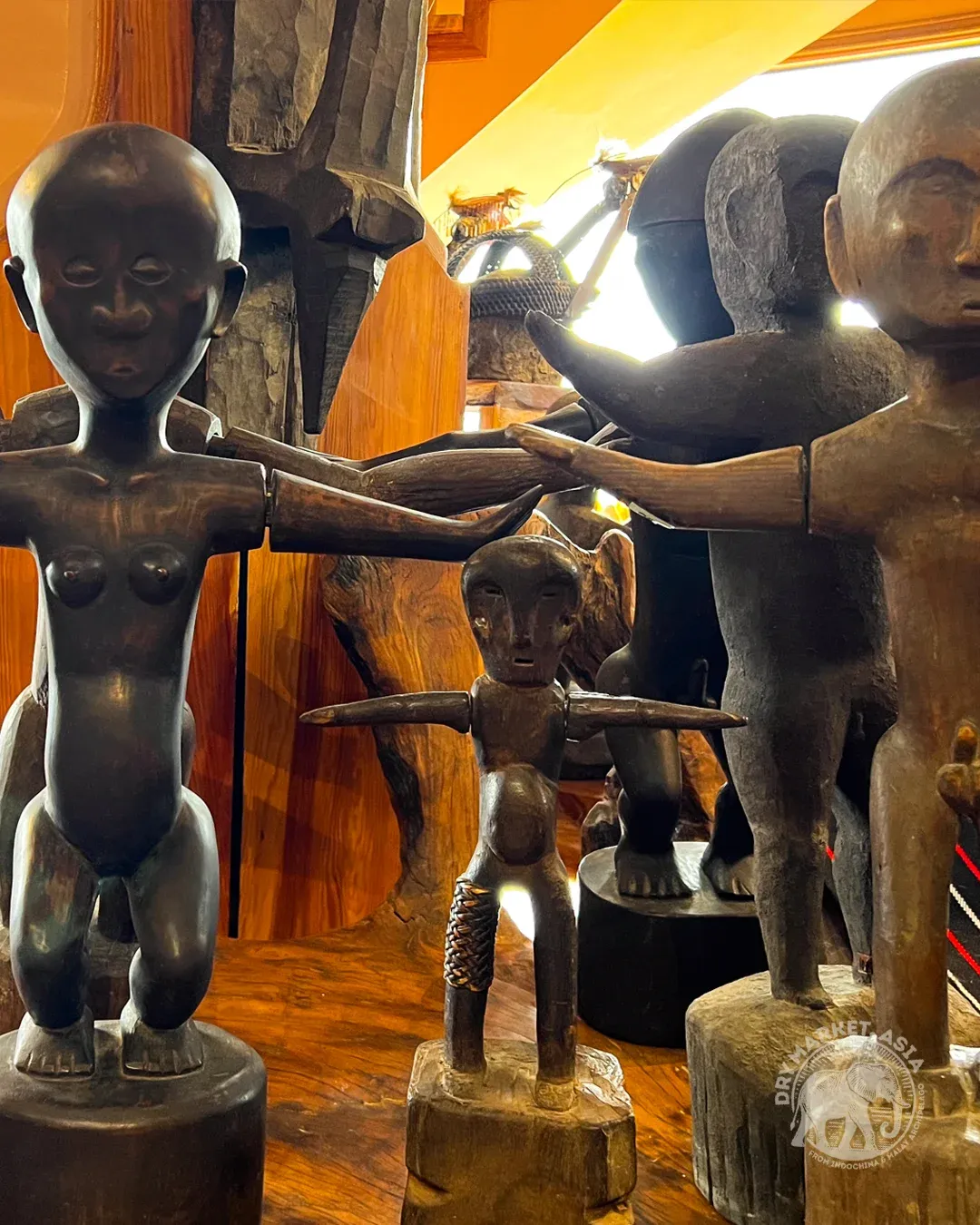
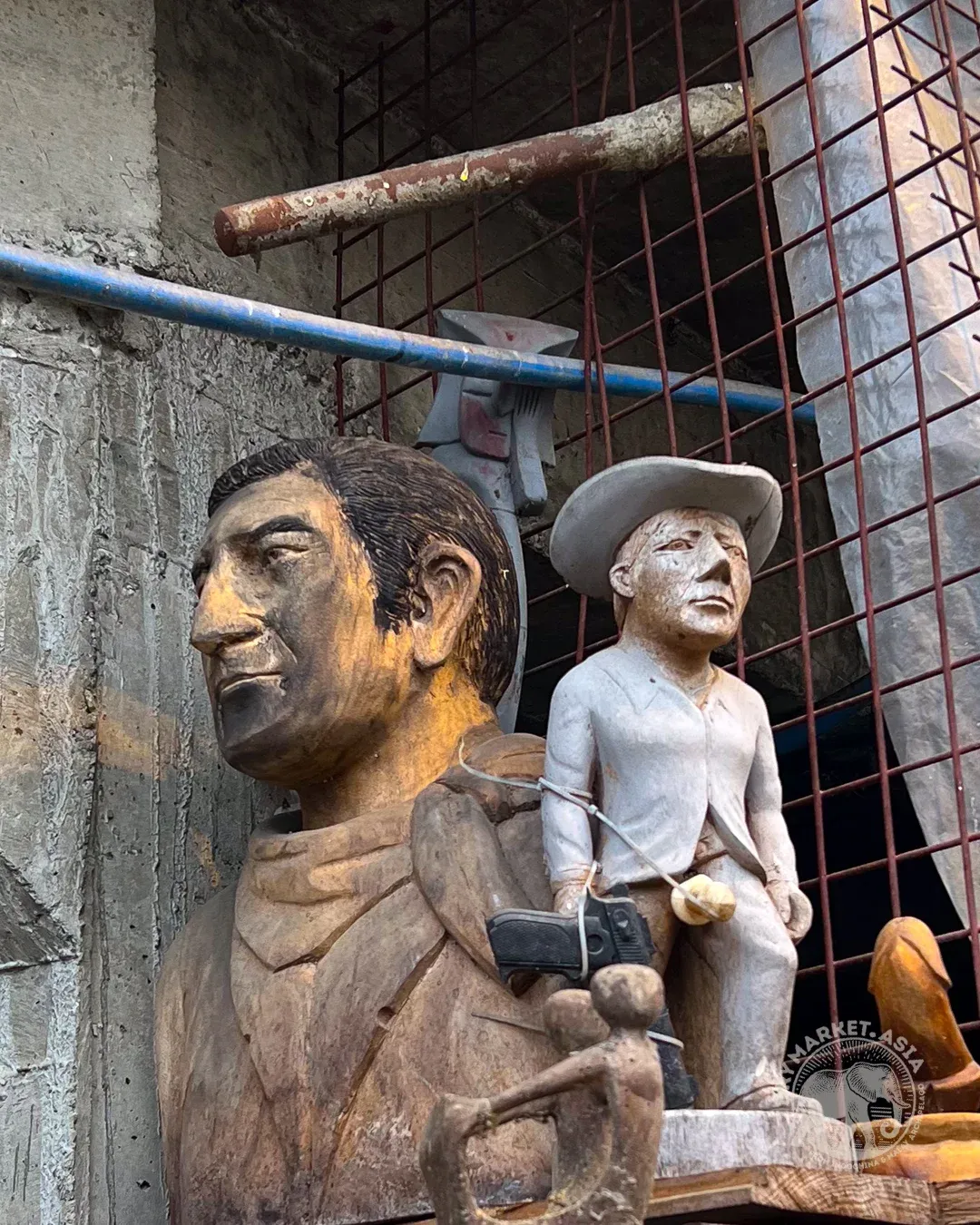
Bulul are traditionally carved from narra, the hardwood associated in Ifugao cosmology with health, happiness, and prosperity. Once the carving is complete, it is consecrated through a ritual that involves reciting the myth of Humidhid, the deity who made the first bulul. The figure is then bathed in the blood of sacrificial pigs.
Blood is the medium of the transaction. During tunod, the rice-planting season, the Bulul is touched by hands dipped in the blood of a chicken or pig. Over time, the blood darkens the wood. Grease from food offerings layers onto the blood. The surface compounds.
Form
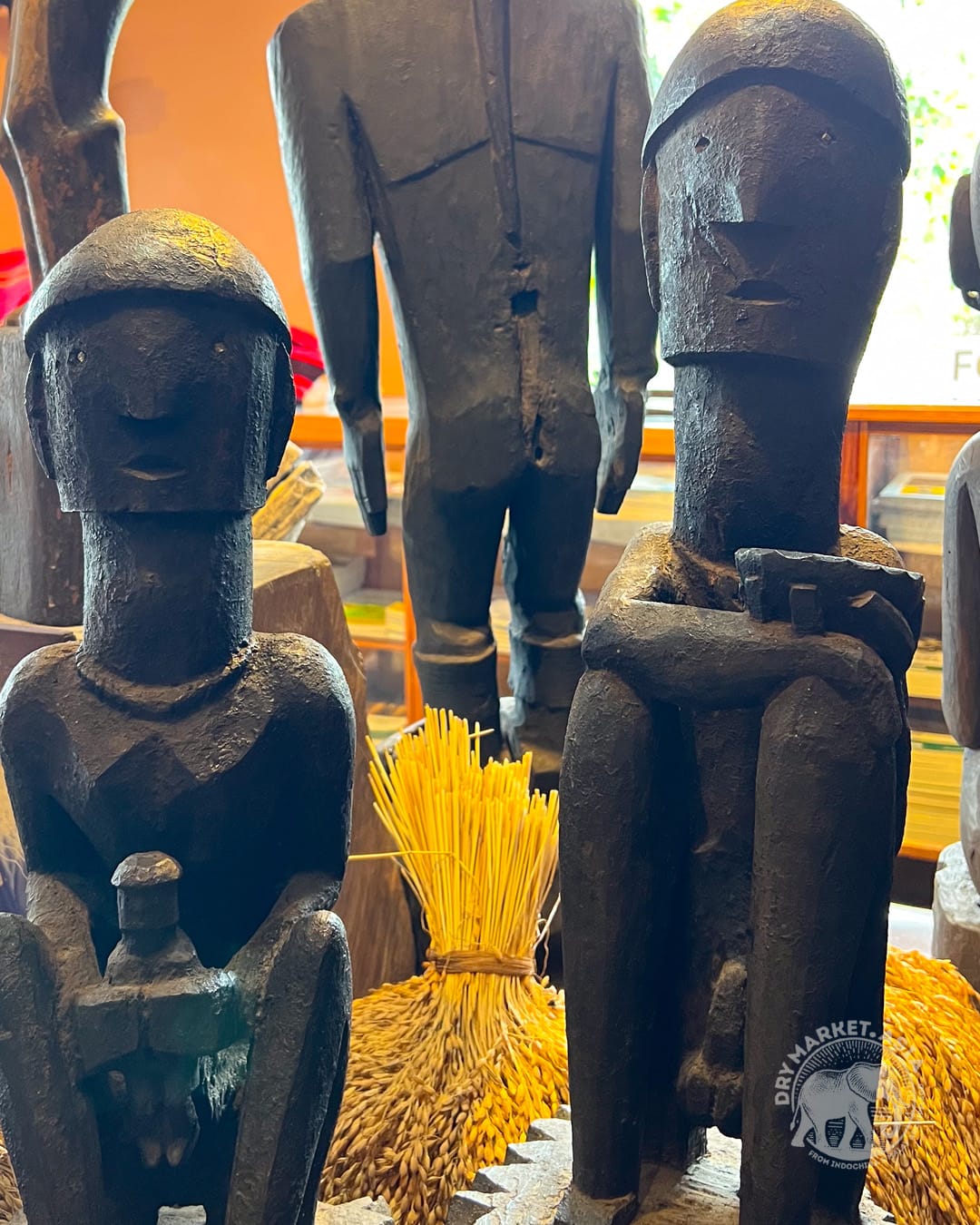
Male and female bulul are often made as pairs, with sex-referenced objects — the mortar for the female, the pestle for the male — included in the composition.
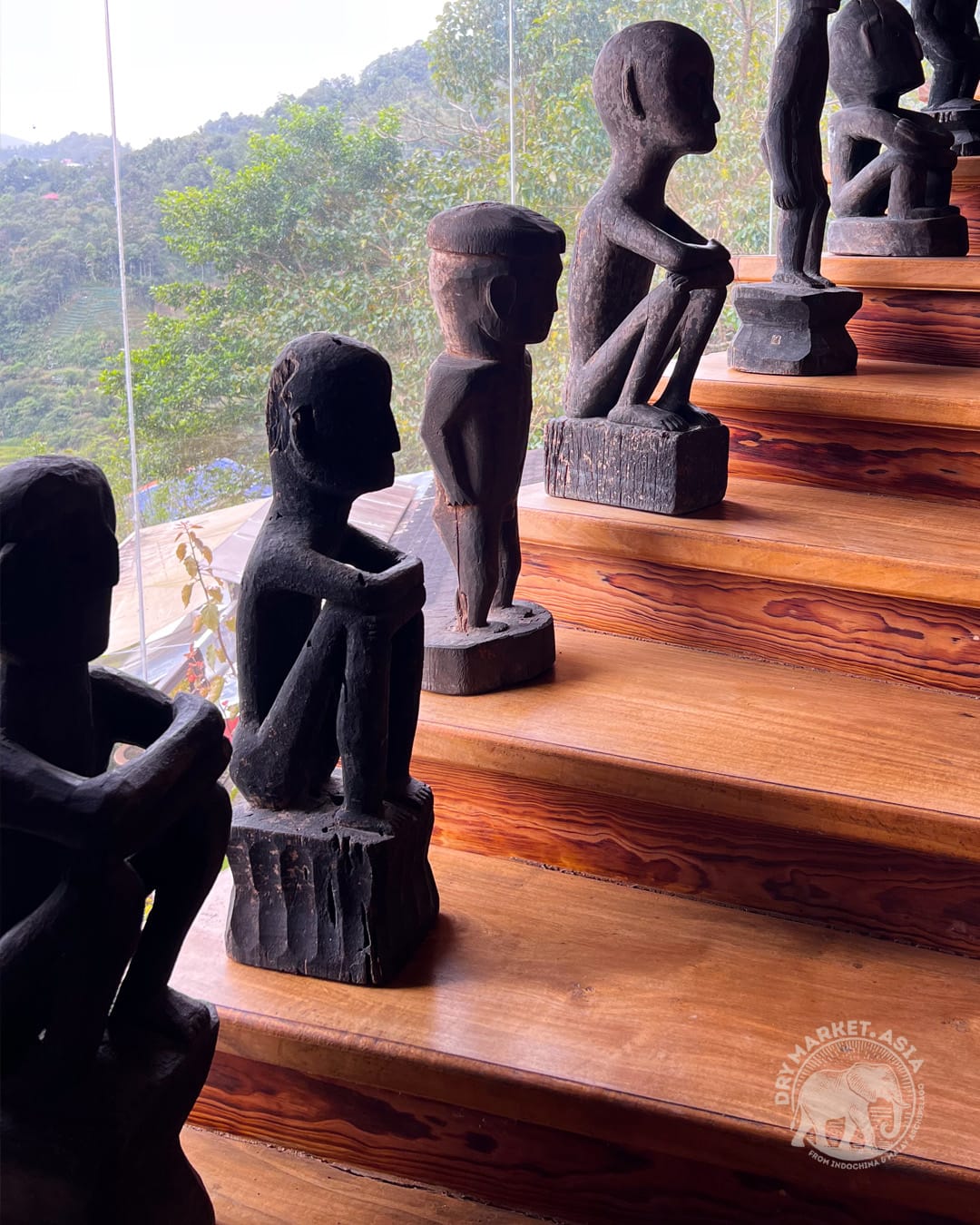
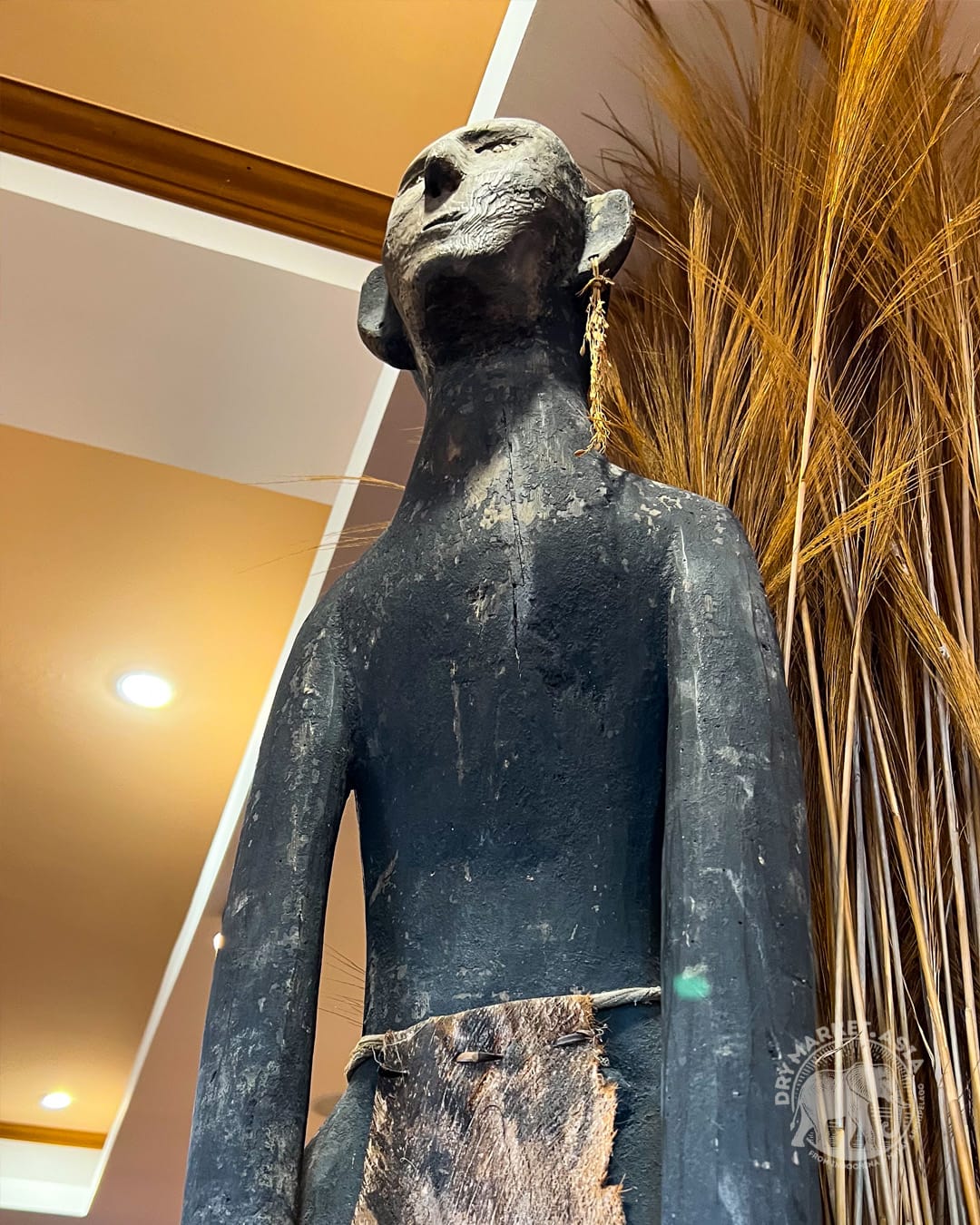
Posture carries its own grammar. Standing Bulul guard the granary and the rice storage. Seated or squatting Bulul are oriented toward good harvests and healing.
Standing forms are associated with the northern part of Ifugao; seated forms with the southern part, Kiangan and its surrounds. A Bulul is not a single object with a fixed appearance but a family of related forms.
The face is almost always reduced to essentials. Eyes indicated by slits or low relief. Mouth closed or barely open. The expression, where one can be read at all, is attentive in the way that a person waiting is attentive.
Individuating a bulul would miss the point — the figure is a vessel for a class of spirit, not a specific ancestor's likeness.
Context
The cosmology behind the Bulul involves not one deity but a layered set of relationships.
Nabulul is a god who inhabits bulul figures, guarding the rice and making the harvest plentiful. Bugan is his spouse, a goddess who also inhabits bulul figures with the same function. And then there is Namtogan: a Hephaestus-like paraplegic god of good fortune whose presence made the rice harvests and the community's livestock bountiful.
Namtogan was staying with humans at Ahin when the community began neglecting the bulul. He left. His departure brought a curse: misfortune, poor harvests, sickness. The people eventually persuaded him to return. When he did, he taught them how to create bulul and how to perform the rituals the figures required. The curse lifted.
The bulul tradition is framed as a remedy for neglect. The arrangement is binary and conditional.
The figure protects the granary as long as the granary acknowledges the figure. Cease the offerings, and the agreement dissolves. The wood goes back to being wood.
The System Holds
The National Museum of the Philippines explains: before consecration, a carved figure is tag-tagu — a human shape in wood, devoid of signification. After the rituals, the blood, the invocation of Humidhid — it becomes Bulul. Something else entirely. A vessel with a tenant.
The working Bulul works within a longer system — a watershed above, a field of rice below, a calendar of planting and prohibition, a stack of relationships that the figure sits at the bottom of. It is the terminal node of a working infrastructure.
Modernity has brought pressures on that infrastructure. Young people leave the terraces. Commercial rice displaces tinawon. The muyong above the fields — the forest that feeds the system — is cleared for cabbages. Each of these is a break in the stack.
And yet in Hungduan and Kiangan, young Ifugao cultural workers are relearning the mumbaki's practice, families still seal their granaries at tungul, and the first sheaves of the harvest still come back to the threshold before anyone eats.
The bulul watches. The wood absorbs. The arrangement holds, for now.